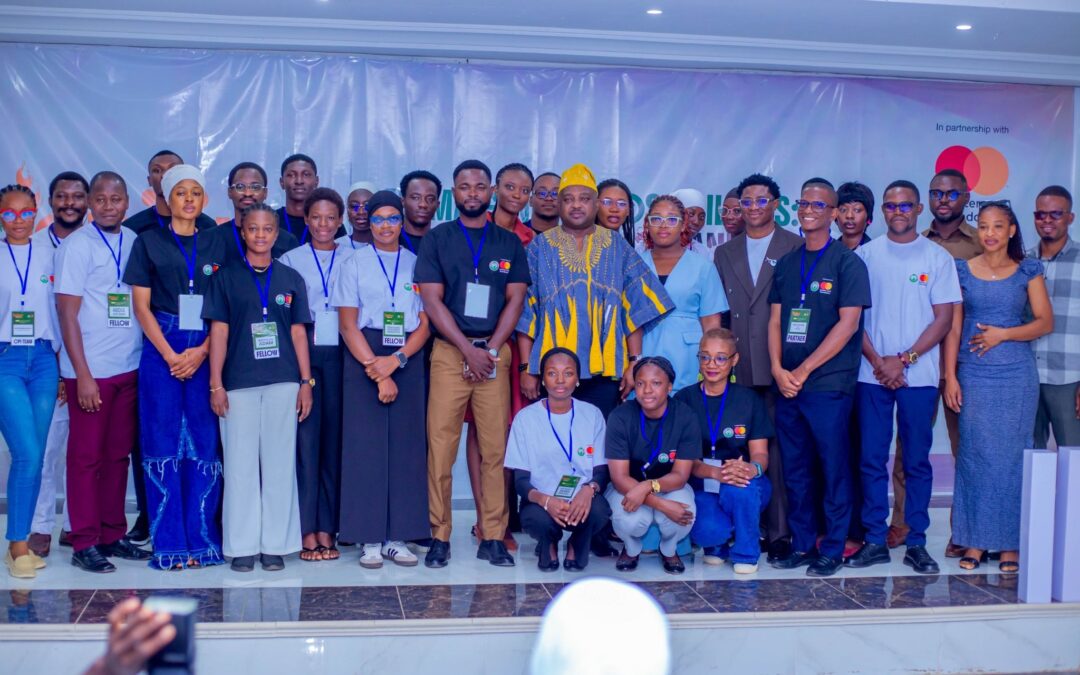
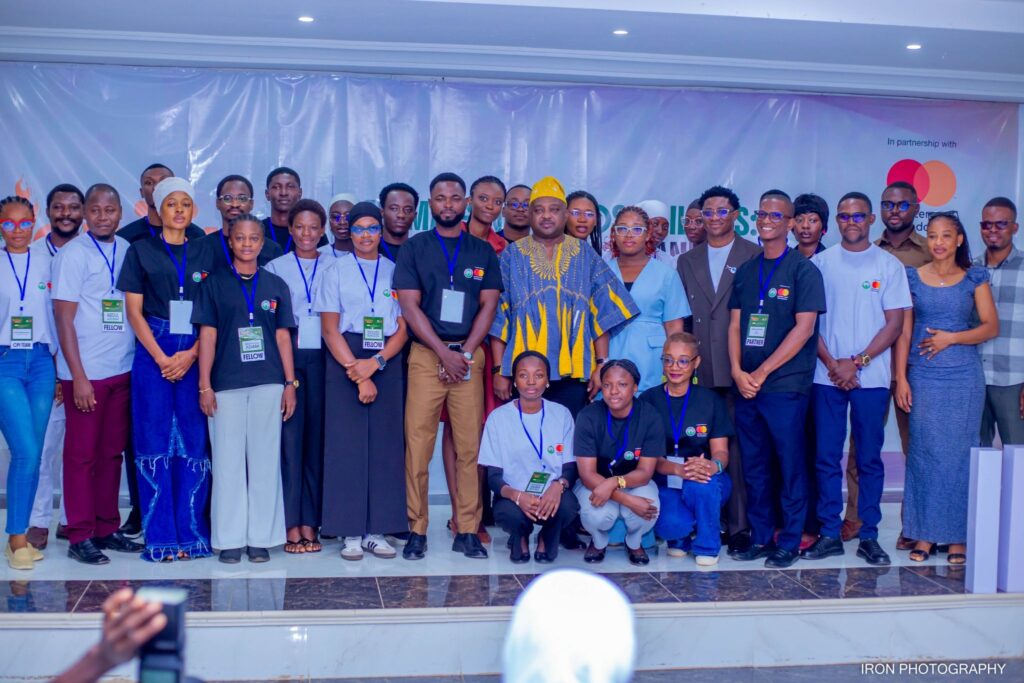
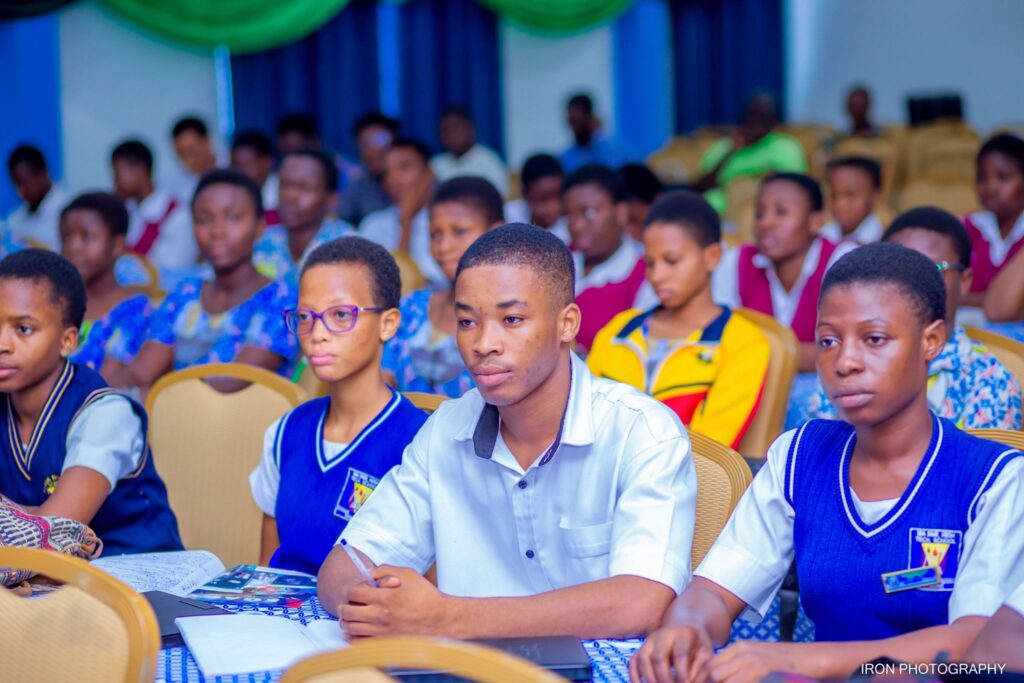
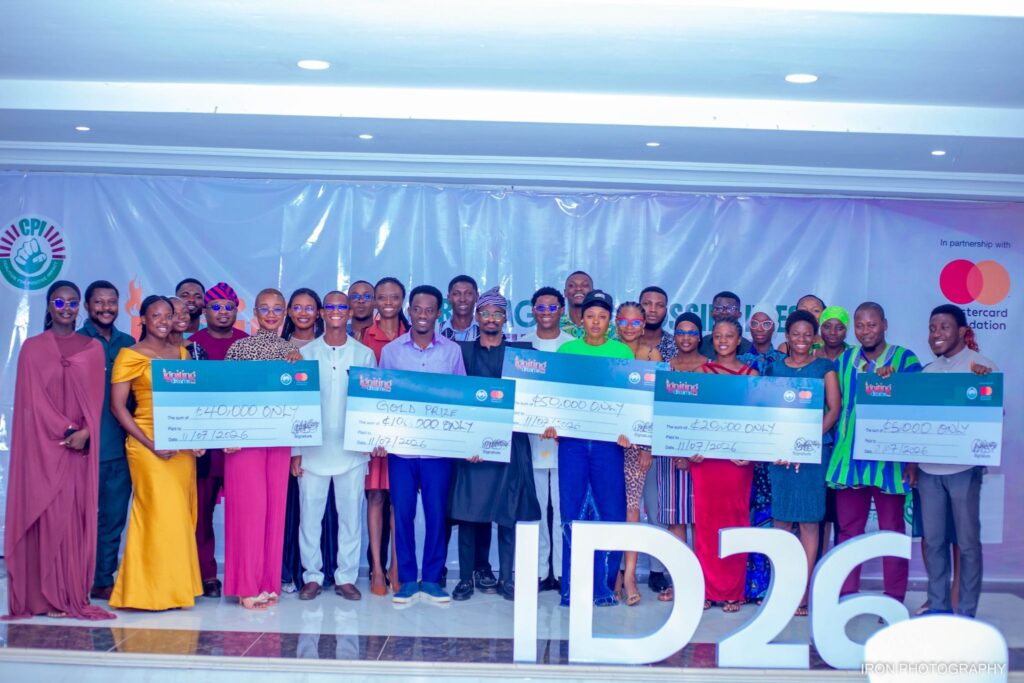
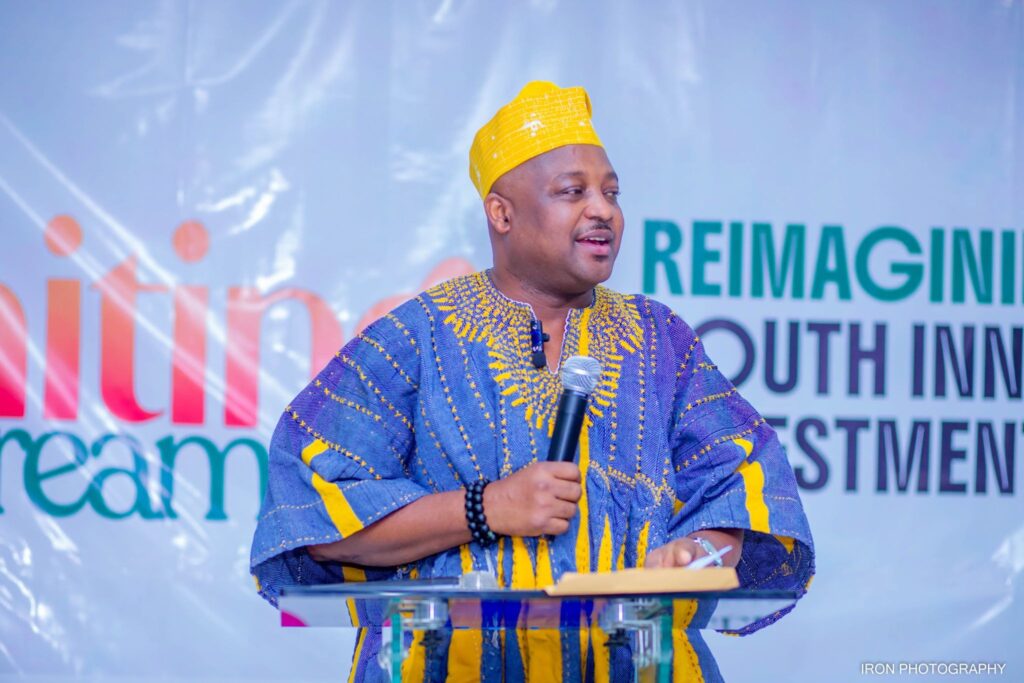
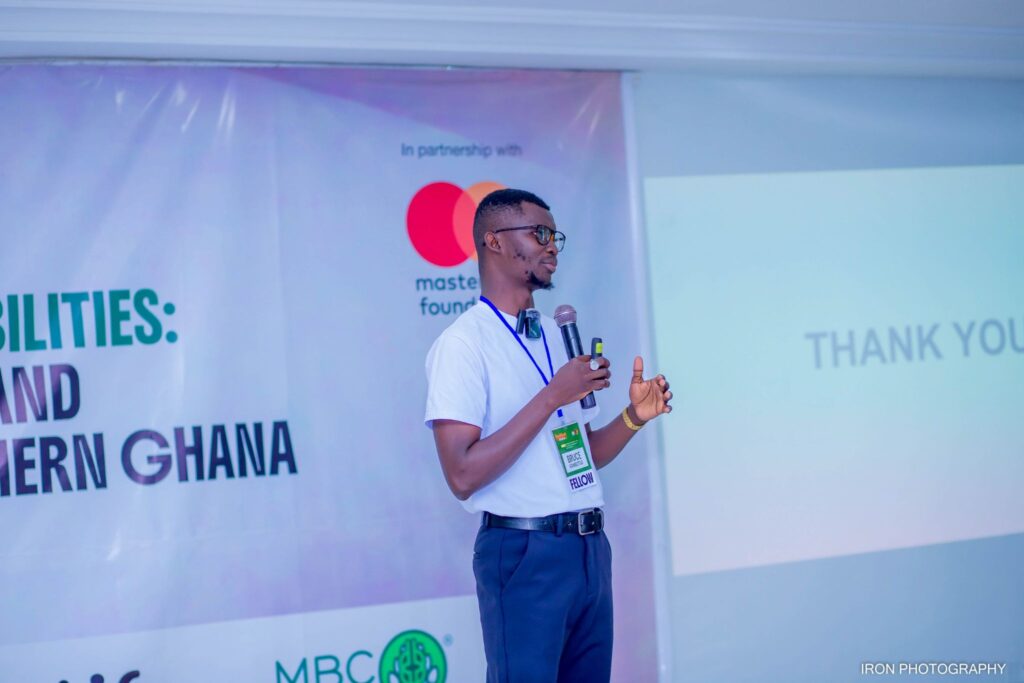
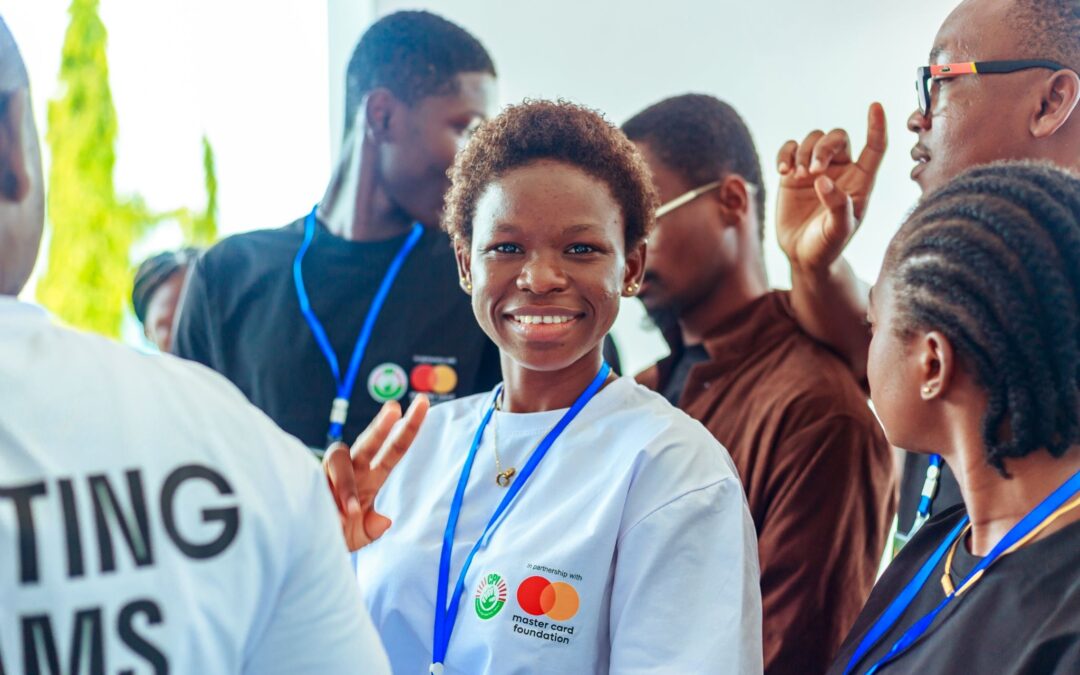
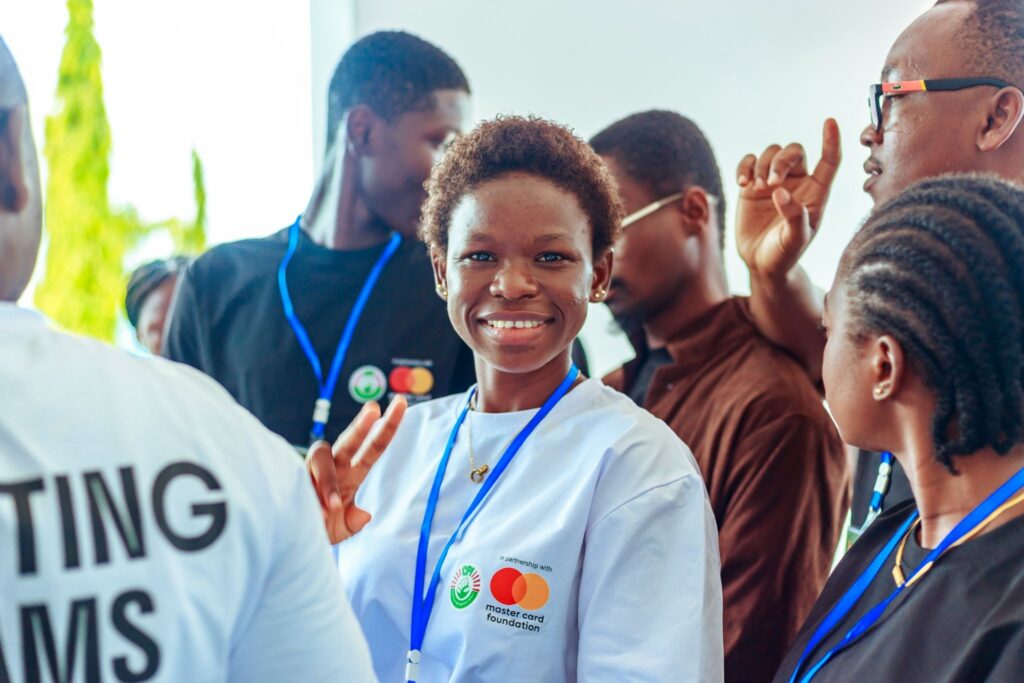
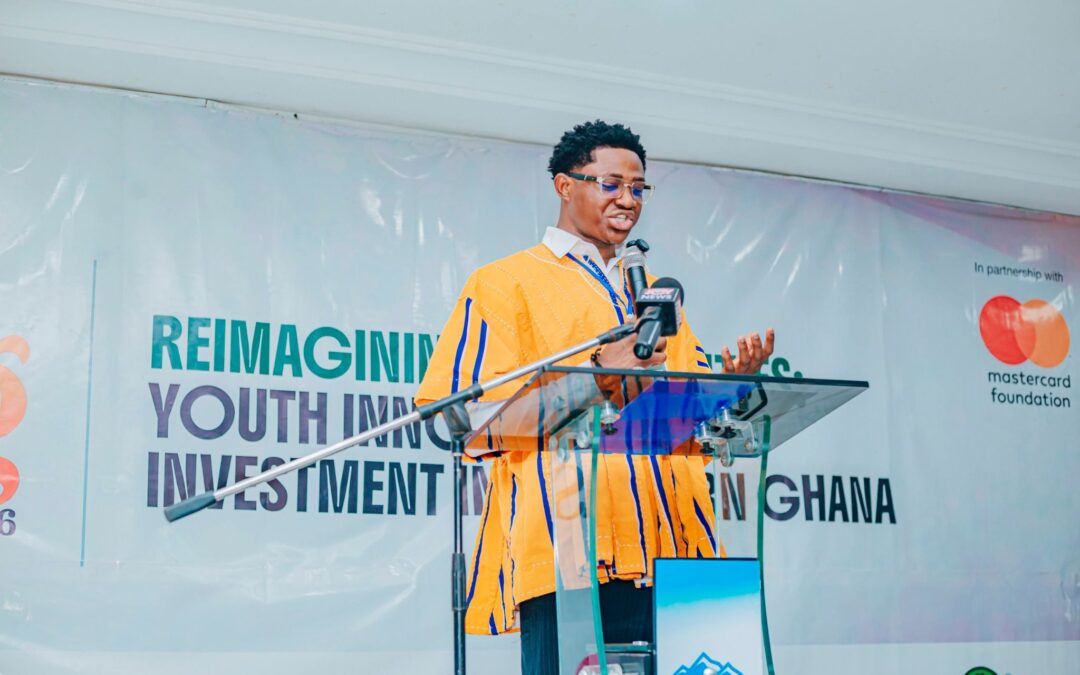
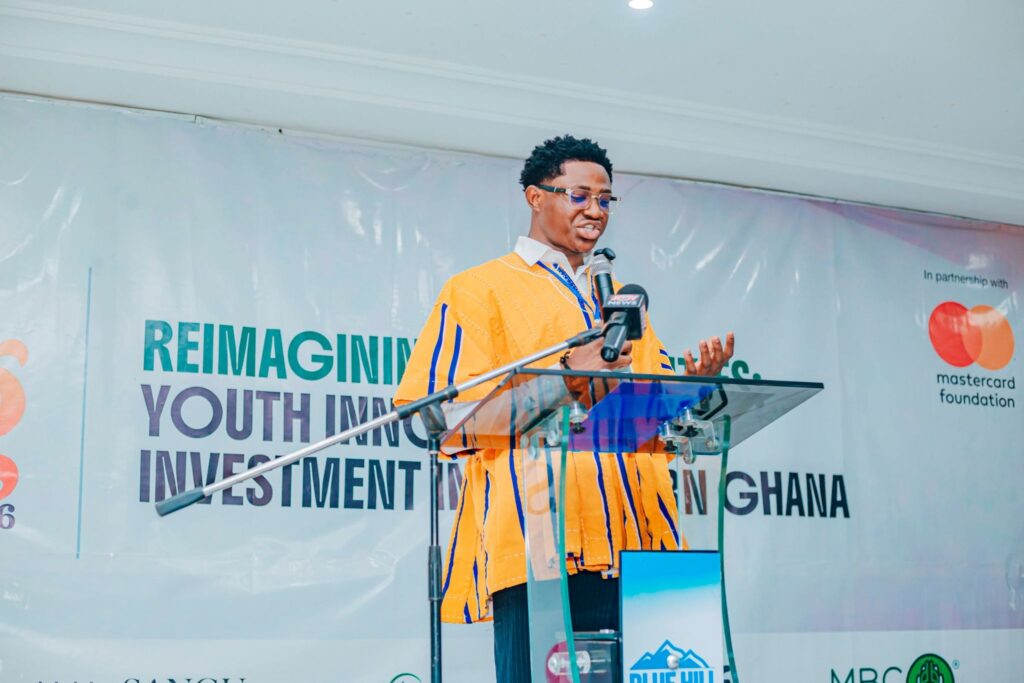
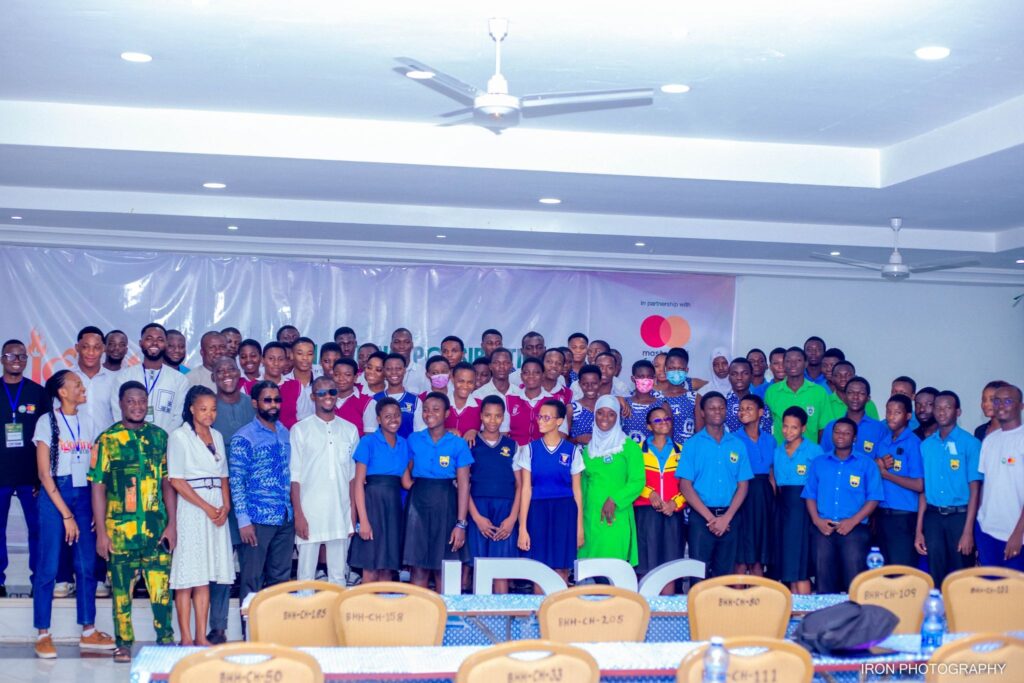
The 8th Igniting Dreams Summit took place on July 10 and 11, 2026 at the Blue Hill Hotel in Wa, under the theme “Reimagining Possibilities: Youth Innovation and Investment in Northern Ghana.” It was the largest edition in the programme’s history by every measure that matters.
The Numbers
CPI planned for 300 participants. Over 450 registered, and by the close of the second day, more than 500 had attended, entrepreneurs, investors, traditional leaders, policymakers, development partners, and ecosystem builders from across Ghana.
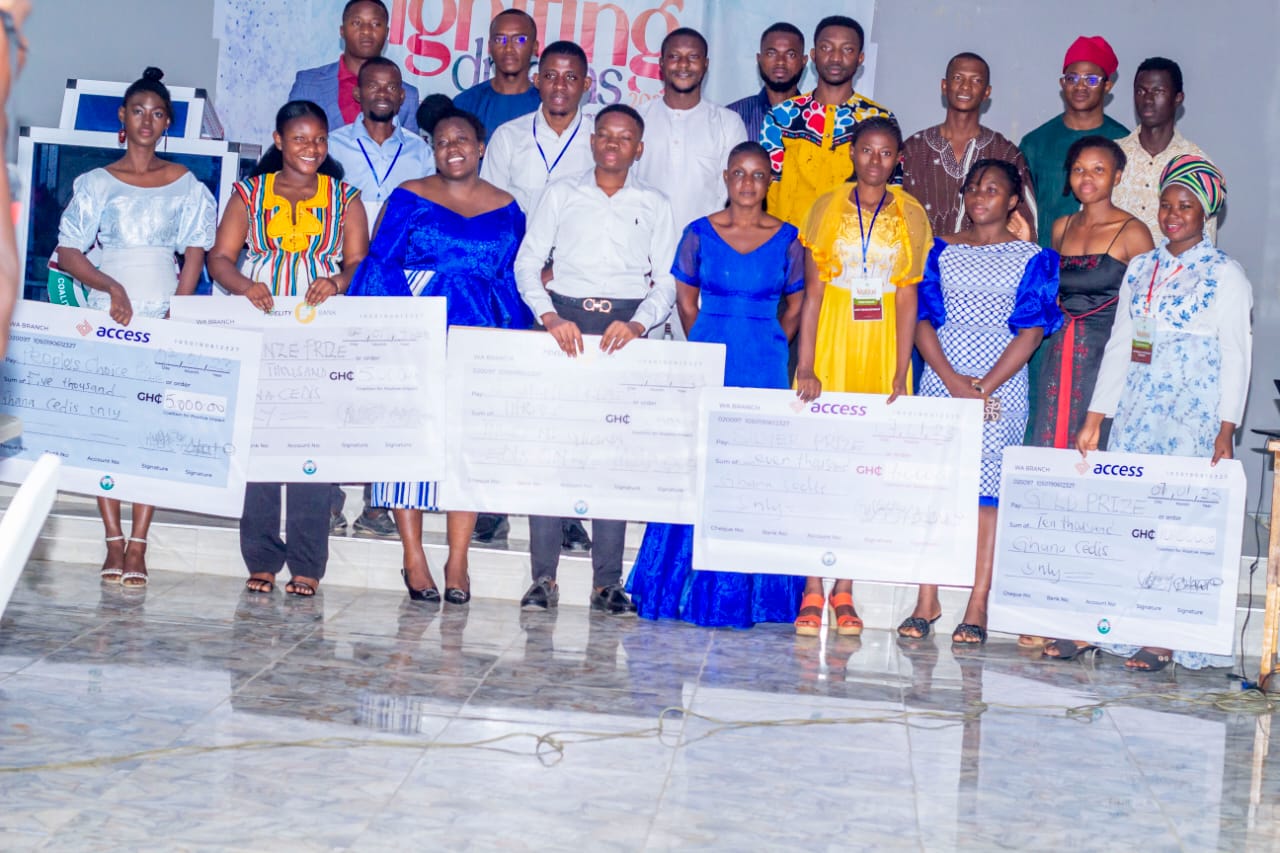
18 fellows completed the full fellowship pipeline: virtual training, one-week residential boot camp, and live pitch competition. GH₵440,000 in seed capital was awarded to the top 10 performers through a live pitch competition judged by industry experts. Symbolic cheques were presented on stage, with funds to be disbursed directly to the founders’ businesses by CPI, the largest single disbursement in the programme’s eight-year history, made possible by a partnership with the Mastercard Foundation.
The Prize Winners
Frank Abendin of Agro KiniSols Ltd. took home the Gold Prize of GH₵100,000 to scale his AgriTech business focused on transforming guinea fowl production in Northern Ghana. Farihana Mohammed and Abdul Aziz Issah each received GH₵50,000. Thamar Victoria Afedu-Annan, Grace Yakubu and Yuori Ernest Yirsob each received GH₵40,000. Elizabeth Yennuloom Dayaak, Mohammed Amina Bimunka, Rafihatu Adam, and Habiba Issah each received GH₵20,000. All prize winners now enter a 6-month accelerator backed by CPI and the Mastercard Foundation. Eight others received GHS5,000 each to help them fulfill legal and regulatory requirements.
The People in the Room
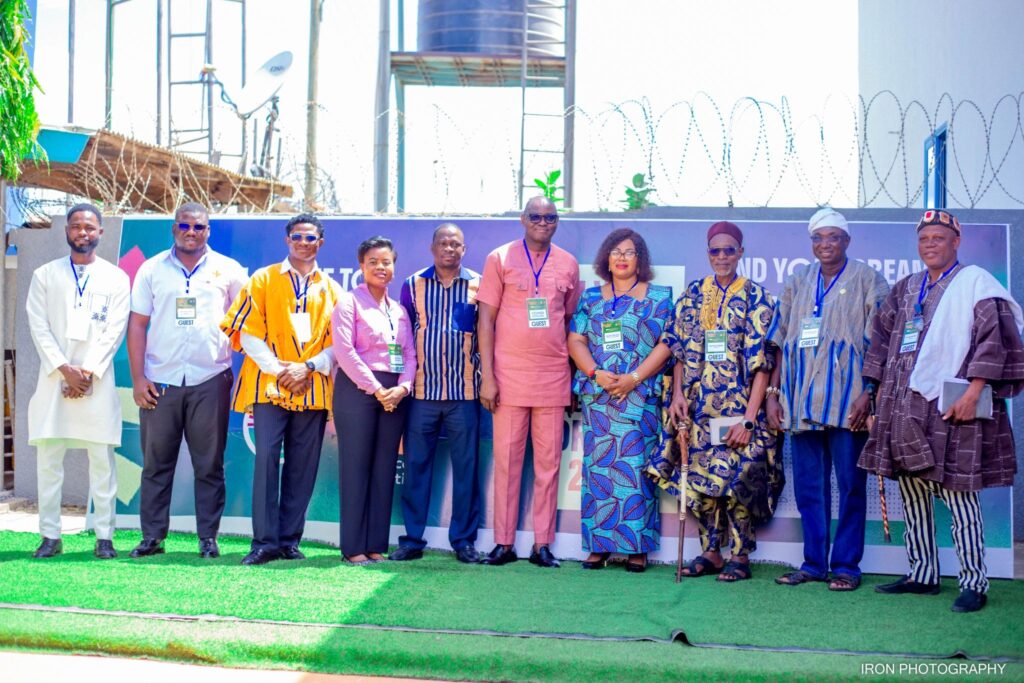
The Upper West Regional Minister Charles Lwanga Puozing delivered the Day 2 keynote, recognising the strong representation of women — a deliberate design choice that produced a 70 percent female cohort. CPI President Maazu Bayuoni delivered the opening address, tracing the region’s development challenges to historical structural inequalities and announcing Vision 2050. Mawuse Gyisun of Sommalife Ltd shared her experience building an agribusiness from a motorbike on rural roads into a company that has digitised over 100,000 farmers. Mumuni Amina, 2023 prize winner, described how her seed funding grew a shea butter operation into an enterprise training 38 women and producing eight tonnes monthly.
Breakout sessions challenged participants to develop technology-driven solutions to real business problems — demonstrating what CPI is building beyond individual businesses: a collaborative ecosystem of founders who think together.
The Media Reach
The Summit generated coverage across Citi Newsroom, MyJoyOnline, radio, television, and social media. On LinkedIn, participants independently published reflections that extended the conversation well beyond the event. One widely shared post by participant Deborah Boodeme captured the shift plainly: “Investing in Northern Ghana is not an act of charity; it is a strategic investment in one of Ghana’s most underutilised economic regions.”
The Partnerships
The 2026 Summit marked the first edition of Igniting Dreams implemented in formal partnership with the Mastercard Foundation, a relationship CPI intends to develop into a sustained, long-term collaboration across future editions. The broader coalition supporting the programme includes Noni Hub, Fido, the Sangu Delle Foundation, the Anwelle Foundation, mNotify and MBC Africa.
The multi-partner model reflects CPI’s conviction that no single organisation or funder can close the pioneer gap alone. What the Summit demonstrated is that when capital, training, mentorship, and community converge around the right founders, the results are immediate and measurable.
The Story Being Told
Development programmes are measured by outputs. Those outputs matter and are recorded above. But the Summit produced something harder to quantify and more consequential: a shift in the story being told about Northern Ghana.
When 500 people converge at the Blue Hill Hotel in Wa for two days centred on youth innovation and investment, they are voting with their time. When 18 founders stand on a stage to pitch their innovative businesses to ecosystem players after months of structured training, they are providing evidence that the narrative of deficiency is incomplete. When GH₵440,000 is deployed in a single afternoon to businesses that are already operating and already employing, it stops being a donation and starts being an investment thesis.
The Summit did not create these entrepreneurs. They were already building. What it created was visibility.
Investment follows attention. Attention follows stories. The story the Igniting Dreams Summit 2026 told is simple: Northern Ghana’s entrepreneurs are not waiting to be saved. They are ready to be invested in.
The question is whether you are ready to meet them.
Learn more about CPI and the Igniting Dreams programme at cpimpact.org and id.cpimpact.org.
There is a version of the conversation about Northern Ghana that most development audiences know well. It speaks in the language of gaps. It frames the north as a region defined by what it lacks, and it tends to produce interventions that are well-meaning, short-term, and ultimately insufficient.
At the 8th Igniting Dreams Summit in Wa, CPI President Maazu Bayuoni replaced that conversation with a different one.
“This is not a story of a region that failed. This is a story of a region that was failed.”
Bayuoni’s argument was grounded in data that has been available for years but rarely centred in conversations about the north’s entrepreneurial potential.
All five northern regions rank among Ghana’s most deprived. The Savannah Region leads with 49.5 percent of its population classified as multidimensionally poor, followed by the North East at 48.1 percent, Upper East at 43.0 percent, Northern at 38.4 percent, and Upper West at 37.4 percent. A landmark May 2026 GSS report confirmed that the six poorest districts in the country are all within the North East Region alone.
Youth unemployment across the five regions sits at 25.7 percent. Households in agriculture face poverty rates more than five times higher than those in services. These figures describe an economy where the young population is growing, the formal job market is not absorbing it, and the informal businesses that fill the gap operate without access to capital, mentorship, or markets. This is the pioneer gap. In Northern Ghana, it is the cumulative result of financing systems that were never designed to reach the region’s founders.
An Investment Opportunity.
Bayuoni was precise about what he was not doing. He was not asking for sympathy. He was not presenting the north as a beneficiary in need of rescue. He was presenting it as an economy with unrealised returns.
“Despite every barrier, youth-led businesses are emerging across agriculture, technology, fashion, and manufacturing. Northern Ghana sits on extraordinary endowments — shea, groundnuts, livestock, minerals, and now gold. It has a young population that is hungry for opportunity.”
— Maazu Bayuoni, CPI President
The 2026 cohort is evidence of this thesis. Sixty-five percent of fellows operate in agribusiness, building on the region’s natural comparative advantage. The cohort is majority female, mostly degree holders, and spans all five northern regions. These are not the demographics of a region that lacks human capital. They are the demographics of a region whose human capital has been systematically under-resourced.
The Call for Partnership
Bayuoni’s address directed its sharpest language at the financing ecosystem.
“We are not asking for pity. We are not asking for charity. We are asking for partnership and investment.”
— Maazu Bayuoni, CPI President
Bayuoni urged investors and development finance institutions to adopt financing models calibrated to the realities of early-stage entrepreneurs in underserved communities. The Igniting Dreams model is built on this conviction: fellows are selected not because they have ideas, but because they already have businesses, operational and showing early traction. The programme provides what the market has withheld: training, mentorship, seed capital, and entry into the Niibala Alliance.
At the Summit, GH₵440,000 in seed funding was deployed to fellows in a single afternoon. Every cedi went to a business already operating, already employing, already embedded in a northern community.
The Government Response
The Upper West Regional Minister, Charles Lwanga Puozing, delivered the keynote address on Day 2 of the Summit and set a tone that reinforced CPI’s framing. He spoke to the work CPI has been doing in Northern Ghana, acknowledged the impact it is creating on the ground, and gave particular recognition to the strong representation of women at the Summit.
“The future of Northern Ghana will not be determined by the challenges we inherit, but by the solutions we create.”
— Charles Lwanga Puozing, Upper West Regional Minister
His presence at the Summit, alongside traditional leaders, business executives, investors, and development partners, reflected a growing alignment between government rhetoric and the on-the-ground work of organisations like CPI that are building the entrepreneurial infrastructure the region needs.
Voices From the Ecosystem
Mawuse Gyisun of Sommalife Ltd. described building an agribusiness in the north as an experience that tested every assumption about what is possible. She built it anyway. Sommalife has now digitised over 100,000 farmers and connected more than 40,000 to active commercial markets. Her testimony made the point plainly: the barriers facing northern entrepreneurs are structural, and they are reversible.
Mumuni Amina, winner of the 2023 Igniting Dreams Prize, provided the most concrete evidence of the model’s returns. Her seed funding transformed a Bole-Bamboi shea butter operation into an enterprise that now trains 38 women and produces eight tonnes monthly. That trajectory is the investment case in miniature.
The Broader Frame
Northern Ghana is not a problem to be managed. It is an economy to be invested in. Its entrepreneurs are not waiting to be saved. They are building, hiring, and growing. They need capital that meets them where they are.
The 2026 Summit, its 500 participants, its GH₵440,000 in deployed capital, its 18 fellows now entering the accelerator phase, is the evidence that the investment case is real.
The question is whether the capital will follow.
Learn more about CPI’s work and partnership opportunities at cpimpact.org.
On July 10, 2026, CPI President Maazu Bayuoni stood before an audience of over 500 people at the Blue Hill Hotel in Wa and did something unusual for a summit welcome address. He did not start with gratitude. He did not start with a programme update. He started with a number: 25 years.
Why 25 Years
Most programmes that work with young entrepreneurs in underserved communities operate on three- to five-year funding cycles. They recruit, train, support, and report. When the cycle ends, the strongest leave behind something useful. But many leave behind very little.
The problem is not always quality. It is a time frame. Building an entrepreneurial ecosystem, the networks, capital flows, mentorship culture, and community of founders who support each other, takes longer than any grant cycle can contain.
CPI has worked in Northern Ghana since 2019. In seven years, the organisation has trained and funded over 70 entrepreneurs, created more than 500 jobs, and reached over 10,000 young people across the five northern regions. Meaningful numbers and relative to the scale of the challenge, a beginning.
The five northern regions consistently record the highest rates of multidimensional poverty in Ghana. The Savannah Region leads at 49.5 percent, followed by the North East at 48.1 percent, Upper East at 43.0 percent, Northern at 38.4 percent, and Upper West at 37.4 percent. A May 2026 GSS report confirmed that the six poorest districts in Ghana are all within the North East Region alone.
Youth unemployment across the five regions sits at 25.7 percent. In the Northern Region, the rate rose from 9.5 percent in Q1 2024 to 11.8 percent by Q4 — moving against the national trend. Households in agriculture face poverty rates more than five times higher than those in services.
These are not statistics that respond to three-year interventions. They require a generational response.
Vision 2050 is that response, made public.
What Vision 2050 Actually Means
Vision 2050 is not a slogan. It is a directional commitment that positions CPI as a catalyst for economic transformation across the northern regions. A strategic document is forthcoming, giving stakeholders and partners a concrete framework for partnership conversations with CPI.
The vision is rooted in Northern Ghana. While the language speaks to African entrepreneurs broadly, the work begins and remains anchored in the five northern regions, where CPI was founded, where Igniting Dreams operates, and where the pioneer gap is widest.
The pathway runs through the Igniting Dreams programme. Every cohort is a building block. The Niibala Alliance connects fellows across years. The annual Summit keeps the ecosystem visible and accountable.
In 2026, CPI doubled the fellowship to 20 fellows and grew its prize funding by more than ten times. GH₵440,000 in seed capital was disbursed to prize-winning entrepreneurs at the Summit. These are the early signs of a programme scaling deliberately, its ambition growing alongside its capacity.
The Honest Distance
“Despite every barrier, youth-led businesses are emerging across agriculture, technology, fashion, and manufacturing. Northern Ghana sits on extraordinary endowments, shea, groundnuts, livestock, minerals, and now gold. It has a young population that is hungry for opportunity.”
25-year plan that pretends its early chapters are further along than they are is not a plan. It is a press release. CPI is clear-eyed about the distance between 70 entrepreneurs funded and one million empowered. That honesty is the foundation the vision stands on.
What CPI can say with confidence is that the model works. Fellows build stronger businesses. Businesses create jobs. Jobs change households. Households change communities. That chain of causality is what the Igniting Dreams model has demonstrated, edition by edition, since 2019. Vision 2050 is the commitment that it holds at scale, with the right partners behind it, made public so that CPI is held to it.
What Partnerships Make Possible
No single organisation can close the pioneer gap alone. The coalition behind the programme, Noni Hub, Fido, the Sangu Delle Foundation, the Anwelle Foundation, and mNotify, alongside the Mastercard Foundation, reflects a growing recognition that Northern Ghana’s entrepreneurial ecosystem requires coordinated, multi-partner support. Vision 2050 is an open invitation to partners who think in decades. The strategic document, when released, will provide the concrete basis for those conversations.
What You Can Do With This
If you are a young entrepreneur in Northern Ghana: applications for Igniting Dreams 2027 open in early 2027. Bring a running business and a willingness to do the work.
If you are an investor or development partner: the conversation is not about a transaction. It is about what we build together.
If you are a policymaker: the founders in the 2026 cohort are already building. What they need is the environment to build faster.
“We are not asking for pity. We are not asking for charity. We are asking for partnership.”
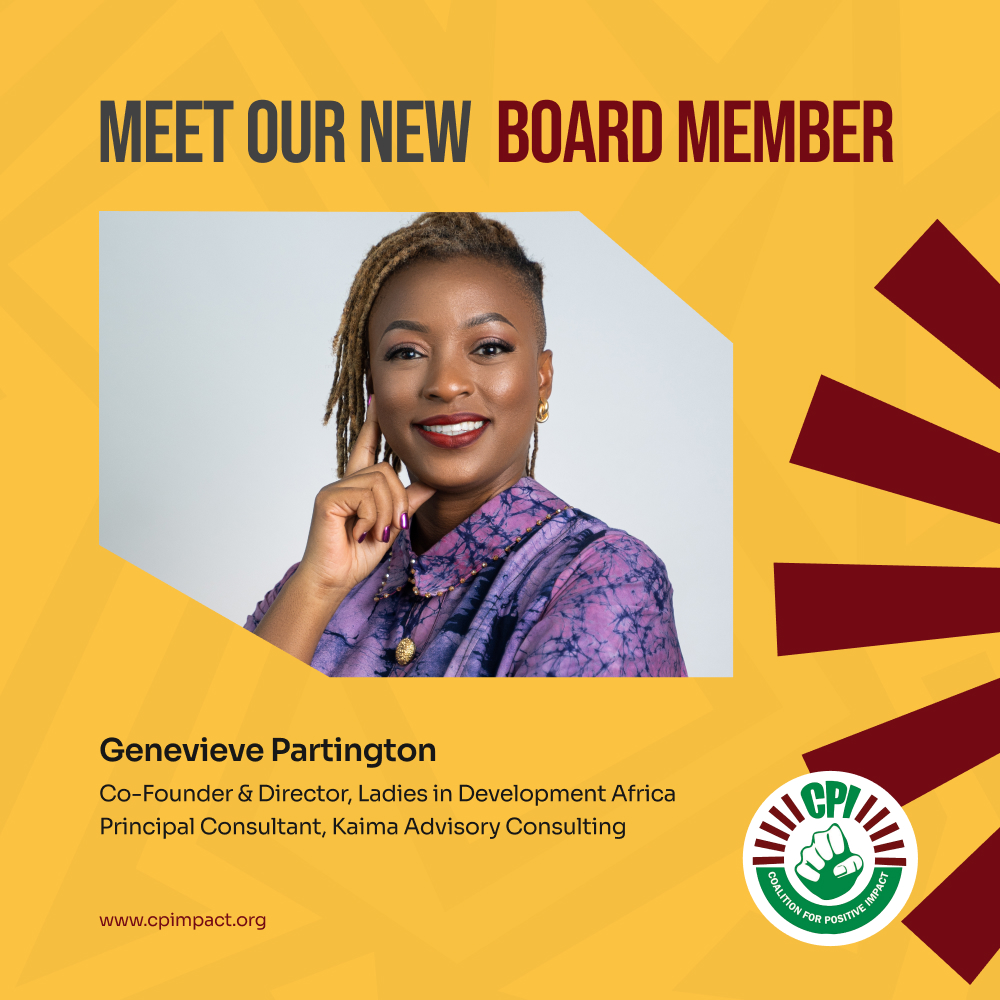
Coalition for Positive Impact (CPI) Appoints Genevieve Partington to its Board of Directors
This appointment signals CPI’s commitment to strengthening governance as the organisation prepares to launch its Vision 2050
The Coalition for Positive Impact (CPI), Northern Ghana’s leading youth-led entrepreneurship and impact investment organisation, today announced the appointment of Genevieve Partington as a member of its Board of Directors, effective May 1, 2026.
Genevieve brings 15+ years of distinguished experience at the intersection of inclusive development, gender equality and nonprofit leadership across Africa. Her career spans from managing Pan-African partnerships and EU-funded multi-country initiatives to leading regional programmes across Africa. Most recently, she served as Country Director at Amnesty International Ghana, where she led national strategy, operations and an 8,000-member movement for human rights and justice.
Genevieve holds a Master of Laws (LLM) in International Law from the University of East London, a Master’s in Development Studies from the Institute of Social Studies, Erasmus University Rotterdam and a Masters in Law, Economics and Management from the Universite Jean Moulin Lyon 3, academic foundations that reflect the rigour and global perspective she brings to everything she does.
Speaking on her appointment, Maazu Bayuoni, CPI’s President, noted:“Genevieve’s appointment is a statement of intent. She brings exceptional expertise in inclusive development, safeguarding and human rights, but what sets her apart is her deep alignment with our mission, demonstrated through her personal conviction that young entrepreneurs in historically marginalized communities are the architects of Africa’s future. As we prepare to launch our Vision 2050 and scale the Igniting Dreams program to its most ambitious edition yet, Genevieve’s leadership on our Board is not only timely; it is poetic. We are not just honoured to welcome her to the Coalition. We are energised by what we are going to build together.”
In confirming her decision to join the CPI Board, Genevieve stated: “I have watched CPI’s work in Northern Ghana with deep admiration for 5 years. What Maazu and the team have built and the impact they have created, through; the Igniting Dreams Summit, the fellowship programme and their funding initiatives across the North is extraordinary. I am joining the Board because I believe CPI is at an inflection point: their thesis has been proven and the opportunity to demonstrate that investing in youth-led enterprises in historically marginalised markets generates transformative returns is ripe. I am proud to be part of this next chapter.”
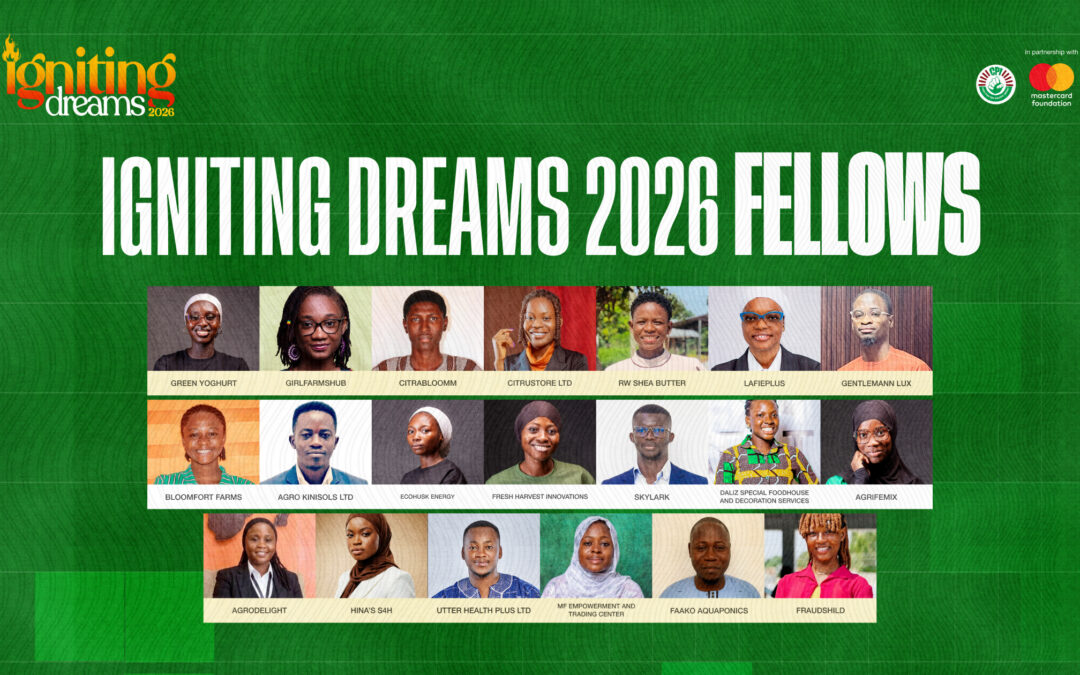
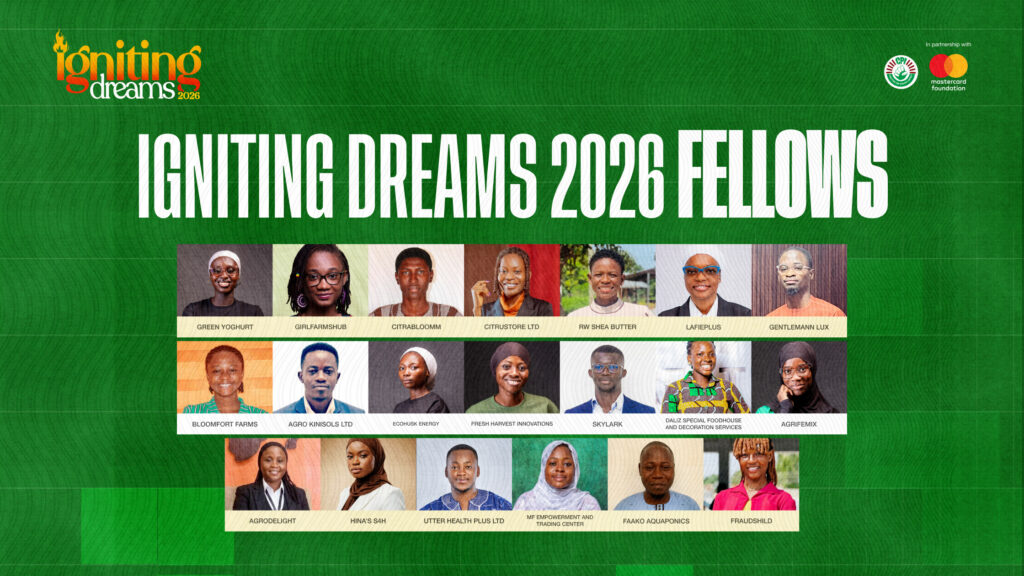
The Coalition for Positive Impact announces its newest class of young entrepreneurs from Northern Ghana — 20 fellows who have already begun their journey.
We are proud to announce the Igniting Dreams 2026 Fellowship cohort, 20 brilliant young entrepreneurs from across Northern Ghana who have been selected through a rigorous multi-stage process and have officially begun their training with CPI and the Mastercard Foundation.
In addition to training and mentorship, all 20 fellows will receive funding between GHS5,000 and GHS100,000 to grow their businesses.
Who They Are
The 2026 cohort is young, educated, and rooted across all five administrative regions of Northern Ghana.
70% of the cohort are women, 14 female fellows and 6 male, making this a female-majority class and a direct reflection of CPI’s commitment to centring women in entrepreneurship development. Female representation extends across every region in the cohort, with the North East Region achieving 100% female representation among its three selected fellows.
Regionally, the Northern Region leads with 9 fellows (45%), followed by the North East, Upper East, and Upper West Regions with 3 fellows each (15%), and the Savannah Region with 2 fellows (10%). Every target region is represented, a result of deliberate action to foster regional balance and inclusion.
In age, the cohort ranges from 20 to 33 years, with a mean age of 25.15 years. Sixty percent of fellows fall between 23 and 28 years, placing this squarely in the early-career stage, founders who are already building, and who arrived here with momentum.
Academically, 80% of the cohort hold at least a bachelor’s degree, including two fellows with postgraduate qualifications. At the same time, the cohort includes fellows with diplomas, certificates, and vocational backgrounds — a deliberate signal that Igniting Dreams is not a programme for the already-privileged. It is a programme for the ready.
By sector, agribusiness is the dominant industry, representing 65% of the cohort, and female fellows lead within it. Beyond agriculture, the cohort brings businesses in technology, manufacturing, food, health, and fashion, with the Northern Region recording the highest sectoral diversity. Technology, notably, is female-driven in this cohort.
The People Behind the Numbers
Every data point in this cohort represents a founder with a clear reason for being here.
For Bruce Kambotuu of Skylark, the decision to apply came from an honest assessment of where passion meets its limits. “My journey in leadership and development has shown me that passion alone is not enough,” he says. “I need structured business knowledge, mentorship, and investment readiness to build sustainable ventures.” What drew him specifically to CPI was its intentionality, in his words, the programme is “not just a funding platform, but a system that equips young entrepreneurs with the skills, mentorship and exposure needed to build viable businesses that create jobs and transform communities.”
That same clarity echoes through the cohort. Ayariba Isabella, founder of CitruStore, joined with a precise goal in mind: “I want to gain the right skills, mindset and strategy to grow CitruStore into a sustainable business.” What she values most about CPI is the same thing many fellows cite: “CPI focuses not just on funding, but on mentorship, skill-building and developing the right entrepreneurial mindset.”
These are not aspirational statements. They are the voice of a cohort that arrived hungry and already building.
What Comes Next
The Fellowship is structured across five phases, each designed to move fellows from early-stage founders to investment-ready entrepreneurs.
Phase 1 — Virtual Business Development Training is already underway. Fellows are working through a structured curriculum covering business modelling, value proposition, and growth strategy.
Phase 2 — One-Week In-Person Boot Camp brings the cohort together in Wa for an intensive residential experience with mentors and peers. Here, they’ll get out of the room and further validate their businesses with real customers.
Phase 3 — Igniting Dreams Summit is our annual 2-day event where fellows pitch their businesses before investors, ecosystem leaders, and partners from across Ghana and beyond.
Phase 4 — 6-Month Accelerator provides the top 10 performing fellows with seed funding and continued support to position their ventures for investment and secure key partnerships.
Phase 5 — Niibala Alliance welcomes graduating fellows into a growing network of Igniting Dreams alumni, a lifelong ecosystem of collaboration, support, and shared growth.
A Movement, Not Just a Programme
Since 2019, Igniting Dreams has empowered over 5,000 young people, funded 50 entrepreneurs, and created more than 400 jobs across Northern Ghana. The 2026 cohort carries that legacy forward — 20 founders from communities where entrepreneurship is not a trend, but a necessity, and where the right support can turn an idea into a livelihood.
We look forward to sharing their stories.
The program is supported by the Mastercard Foundation, Sangu Delle Foundation, Noni Hub, mNotify, and other social impact organizations.
Northern Ghana is at a turning point. The region boasts young people, growing towns, and a robust agricultural sector. Communities in the region are brimming with opportunity. The issues these communities face are fixable problems that must be addressed carefully by the next generation of changemakers. This brief piece aims to clarify which problems matter, why they matter, and how the practical application of technology can expedite results.
Start with livelihoods and market access
Agriculture feeds most households in the north. Smallholder farms produce staples such as millet, maize, rice, and vegetables. But farmers often get low prices and lose value between harvest and the market. Improving incomes means addressing post-harvest loss, aggregation, and access to buyers. Support for agribusiness and processing can turn raw produce into higher-value goods sold regionally and nationally. Evidence from local agri-initiatives shows that better processing and local value chains raise farmer incomes and create jobs.
To seize this opportunity using technology, deploy simple market and logistics platforms that connect farmer groups to buyers. Use basic mobile apps or SMS systems for price discovery, order management, and traceability. Low-cost sensors such as GrainMate from Sesi Technologies and digital records help cooperatives forecast yields and plan drying, storage, or processing. These tools shrink the gap between field and market.
Solve multidimensional poverty by designing for the whole person
Opportunity areas in Northern Ghana are diverse: Health, education, clean water, and stable work, all of which offer opportunities for entrepreneurs. These markets are largely untapped. Providing one service opens up market opportunities for others.
Designing solutions with people in mind solves key problems for underserved consumers and maximises value for investors.
Invest in skills and micro-enterprise
A young population is an asset only if skills match opportunities. In towns like Tamale, Wa, and Bolgatanga, informal markets grow, but many youth still lack the technical and soft skills that support steady work. They need training that links directly to local value chains such as agro-processing, cold-chain services, transport, crafts, and digital services. Online learning platforms can close this gap by offering flexible training in practical skills. Simple e-commerce tools also help young people reach customers and test small ventures with lower risk.
How technology helps: Use blended learning. Served as short in-person workshops plus mobile learning and chat-based coaching, learning must be painlessly driven using philosophies such as adopting learning groups among communities. Marketplaces built for local contexts let artisans and processors reach urban buyers.
Build resilient infrastructure and services
Infrastructure matters. Roads, storage, reliable energy, and water shape whether farms and small businesses thrive. Investments that reduce transport time and energy costs change economics at the household level. Likewise, digital access widens opportunity. Ghana’s overall internet adoption is high and rising, which creates a foundation for digital inclusion in the north. But digital projects must be tailored to local realities: low bandwidth, shared devices, and language diversity.
Here is the role technology could play in all of this: opt for resilient, low-bandwidth solutions. Solar-powered cold rooms with digital temperature logs can cut post-harvest loss for perishable crops. Community Wi-Fi, school-based labs, and localized content in local languages make online training and markets useful.
Choose problems that scale by design
Changemakers should pick problems that allow many people to benefit. Small pilots are useful, but plan for scale from the start. That means designing models that local authorities, cooperatives, or private partners can replicate. Document results, measure impact, and use data to adjust quickly. Trusted local partners make scaling possible.
What impact to expect
When interventions link production to markets, improve skills, and coordinate services, outcomes show up fast. Farmers earn more. Young people start viable businesses. Food waste drops. Health and school outcomes improve. These gains add up. They support resilient households and create demand for new services. In time, the region’s economy diversifies and grows.
A final word
It goes without saying that these problems are not small, to say the least. Therefore, lots of capital needs to be pumped. But one of my favorite Principles of Effectuation by Professor Saras D. Sarasvathy of the University of Virginia Darden School of Business is the Bird in Hand Principle: start with what you have. That is the foremost skill of an entrepreneur: managing scarce resources to create value. But also, do not be discouraged with small beginnings. Choose one local market or value chain. Work with farmer groups and a local tech partner. Measure simple indicators: incomes, post-harvest losses, and the number of youth employed. Use that data to iterate. Prioritize inclusion: women, marginalized communities, and remote villages must be part of the solution.
Those who act early will shape the future of Northern Ghana’s economy. The region holds real opportunities in agriculture, processing, skills development, logistics, technology services, and community infrastructure. Entrepreneurs have not yet explored most of these areas, which means the field is open for builders with clear insight and steady execution. The people who identify gaps, test simple solutions, and commit resources now will secure the strongest positions in the market. The window is open, and those who move with purpose will lead the next phase of growth.
Northern Ghana, long overlooked as an investment location, is poised for an economic transformation. Driven by a powerful demographic dividend, strategic infrastructure development, and a burgeoning entrepreneurial spirit, the region represents the most compelling and undervalued investment opportunity in Ghana today. The key to unlocking this potential lies in backing the young, innovative entrepreneurs who are building the future. The Coalition for Positive Impact (CPI) is the proven conduit for identifying these high-potential ventures and delivering exceptional returns.
1. Debunking the Old Narrative
The outdated perception of Northern Ghana as a remote hinterland unsuitable for investment is heavily contradicted by data and tangible evidence. Pre-colonial history presents the area as a key trade nexus between the country’s south and neighbouring countries (Geier et al., 2015, p.105), and modern analysis from the Northern Development Authority and multiple researchers confirms its viability (Ashong-Katai, 2022).
This reality is defined by five (5) powerful trends:
Demographic Dividend
The northern regions are projected to double their population and experience the highest increase in Ghana’s working-age population over the next 25 years. With a child population (0-14) of 41.32% versus a national average of 35.3%, these regions boast a continuous pipeline of quality talent and consumers (GSS, 2021). Its growing educated middle-class population also signifies increasing earnings and purchasing power. Thus, more money to spend on normal goods!
Strategic Infrastructure
The Tamale and Wa airports were the 3rd and 4th busiest in Ghana in 2024, facilitating over 250,000 domestic travels (GACL, 2024). The upgrade of Tamale airport to an international airport, combined with critical road upgrades and a planned airport in Bolgatanga, solidifies Northern Ghana’s role as Ghana’s primary trade gateway to Burkina Faso and the wider Sahel.
Private Sector Presence
Leading (multi)national companies like MTN, Fidelity Bank, Melcom, and venture-backed Farmerline and Sommalife have already established footprints, signaling rising investor confidence and offering complementary assets for new entrants.
Digital & Economic Leapfrog
As urban populations in cities like Accra and Kumasi peak, migration and economic activity will shift northwards, as we can already see in Tamale, one of the fastest growing cities in West Africa. Alongside this demographic transformation, internet penetration, mobile adoption, and digital literacy are expected to rise sharply, creating a ready market for digital products, services, and jobs.
Minerals and Agriculture
The landmark Black Volta Gold project signals a new era of local ownership and economic stimulation, with a direct forecast of 1,000+ new jobs in construction alone, and the rise of supporting SMEs (Botchway, 2025). The fertile lands of the north, particularly the Sissala areas, housing agribusiness giants like Antika, Kedan, and Alaska, form the nation’s maize basket, producing on a scale that feeds the country. Investing here means unlocking new opportunities in transport & logistics, materials supply, specialized consumables, commodity trading, and value addition.
Simply put: If you aren’t investing in Northern Ghana NOW, you’re missing out on Ghana’s future!
2. The Engine of Growth: Young Entrepreneurs
This macro-economic potential is being activated by Northern Ghana’s greatest asset: its young entrepreneurs. They are brilliant, resilient and hungry for opportunity. They are building businesses in high-value sectors that leverage local advantages for global markets.
Three (3) sectors stand out for their immediate potential:
Shea Value Chain
Ghana’s shea industry has the potential to rival cocoa. The global shea butter market is projected to reach USD 6.8 billion by 2035, expanding at a CAGR of 8.2% (Future Market Insights). Northern Ghana is the epicenter of Ghana’s shea industry and its young entrepreneurs are increasingly building brands that capture this value locally. Additionally, the Ghanaian government has announced a pivotal policy to ban the export of raw shea by 2026, a move designed to boost local value addition and increase returns for local investors (Freshplaza, 2025). This is supported by the establishment and rehabilitation of several processing factories, including the Buipe Shea Processing Factory.
Fashion & The Fugu
The Northern fugu has gained significant domestic and international recognition. It is positioned to capture value in Ghana’s fashion market, projected to grow to US$1.30bn by 2030 (Statista). Young designers are modernizing this cultural asset and leveraging digital platforms to reach a global audience, creating value within the circular and sustainable fashion industry. Ongoing investments in Ghana’s cotton industry are also expected to further boost this industry.
Agribusiness
A new generation of entrepreneurs is transforming the region’s agricultural bedrock into a high-value industry. Moving beyond traditional farming, they are pioneering ventures in commercial aquaculture, value-added food manufacturing, and by-product processing to capture maximum revenue and create sustainable jobs. This potential is supercharged by a fast-growing market projected to reach $21.3 billion by 2030, and a $2 billion Government of Ghana policy framework in partnership with South Korea’s Economic Development Cooperation Fund for critical irrigation and infrastructure development, creating an unparalleled window for strategic investment (Mordor Intelligence, 2025).
3. The Proof is in the Performance
The Coalition for Positive Impact (CPI) has been at the forefront of identifying and catalyzing this entrepreneurial revolution. Over the last 5 years, CPI has deployed capital and training to support 50 young entrepreneurs in Northern Ghana. For every $1 invested, our young entrepreneurs have generated $10 in return and created over 400 jobs together, primarily in shea value-addition, agribusiness, and fashion. We have de-risked investment in this nascent ecosystem and demonstrated a scalable, high-impact model.
The opportunity is clear, the entrepreneurs are hungry, and the model is proven. The missing link is capital to scale. Impact Investing Ghana estimates Ghana’s SME financing gap, which disproportionately affects the Northern regions, at $4.8 billion. We invite investors, development partners, and corporate leaders to collaborate with CPI to unlock the potential of young entrepreneurs in agriculture, fashion, and technology — and to participate in Ghana’s next great economic transformation.
References
Ashong-Katai, F. (2022). Investment strategy and potentials for the Savannah Accelerated Development Authority (SADA) zone. https://eon3group.com/wp-content/uploads/2022/02/Investment-Strategy-and-Potentials-SA-high-Comm.pdf
Botchway, D.T. (2025) ‘Black Volta’s Promise’, The Business & Financial Times (TheBFT Online), 1 October, 2025. https://thebftonline.com/2025/10/01/black-voltas-promise/.
Freshplaza. (2025, January 16). Ghana to ban raw shea exports by 2026. October 26, 2023. https://www.freshplaza.com/latin-america/article/9749475/ghana-to-ban-raw-shea-exports-by-2026/
Future Market Insights. (2025). Shea butter market outlook (2025-2035). October 26, 2023. https://www.futuremarketinsights.com/reports/shea-butter-market
Geier, U., Jorgensen, S.H. and Kassahun, S. (2015). The political economy of development in Ghana: Historical and contemporary perspectives. Oxford: Oxford University Press.
Ghana Statistical Service. (2021). 2021 population and housing census: General report volume 3B, age and sex profile.https://census2021.statsghana.gov.gh/gssmain/fileUpload/reportthemesub/2021%20PHC%20General%20Report%20Vol%203B_Age%20and%20Sex%20Profile_181121b.pdf
Ghana Statistical Service. (2024). 2021 population and housing census: Analytical report on population projections.https://statsghana.gov.gh/gssmain/fileUpload/pressrelease/Population_projection_280624_final_ffa2%5B1%5D%5B2%5D_with_links%5B_final_website.pdf
Mohammed, I.K. (2022). Munich Personal RePEc Archive (MPRA). Ghana’s shea industry: A review of the literature. (MPRA Paper No. 115141). https://mpra.ub.uni-muenchen.de/115141/1/MPRA_paper_115141.pdf
Mordor Intelligence. (2025). Agriculture in Ghana – growth, trends, and forecasts (2025-2030). October 26, 2023, from https://www.mordorintelligence.com/industry-reports/agriculture-in-ghana
Statista. (2025). Fashion – Ghana. October 26, 2023. https://www.statista.com/outlook/emo/fashion/ghana
Yaro, J. A., & Bawakyllenuo, S. (2024, January 15). Ghana’s shea industry is not taking care of the women behind its growth. The Conversation. https://theconversation.com/ghanas-shea-industry-is-not-taking-care-of-the-women-behind-its-growth-216488
The first time I entered a shopping mall was on 25th August 2015. I was 16 years old and had just been admitted to the University of Ghana to undertake my undergraduate studies. The mall looked gigantic. It was beautiful and surreal, and I couldn’t hide my amusement at how one building could contain several stores, restaurants, and service providers. The fleet of cars in the parking area especially blew me away. Given that I had spent the last 16 years of my life exclusively in the Upper West Region, I was quite thrilled to behold such a magnificent building and flurry of activity.
In the seven years since I first saw the Mall, numerous economic activities have proliferated in Northern Ghana, including the emergence of mini shopping malls across the three principal cities of the north (Tamale, Bolgatanga, and Wa), the renovation of the Wa airport which is currently the 5th busiest commercial airport in Ghana with over 25,000 passengers in 2022, the expansion of the Tamale airport to an International Airport, increase in various commercial activities and influx of several foreign merchants. These improvements have driven growth in economic activities in the area and created numerous job opportunities for the people.
Prior to colonial rule, Ghana’s economy was oriented towards trade. Commodities from the forest belt were traded along routes through the north of present-day Ghana onwards to the Sudanese Kingdoms and North Africa. Consequently, cities and states formed in the country’s north. At this time, trade flowed from south to north; Ghana’s northern part was relatively more prosperous and populated than the south. (Geier et al., 2015, p.105).
Various colonial practices acted to change the future development trajectories of the North. Principally, the Colonial State administered the North and the South respectively as a “periphery” and a “core” whereby Northern interest and development were sidelined (Brukum, 1998; Grischow, 1999; Plange, 1979b, 1979a,1984; Songsore, 2003).
Interventions by successive post-independence governments have also largely failed to adequately address the development gaps. This is despite multiple interventions, particularly in northern Ghana, to reverse such embedded problems. These programs include the Savannah Accelerated Development Authority (SADA), now the Northern Development Authority (NDA), which sought to help bridge the gap between the north and the south; and the Savannah Agricultural Value Chain Development Project (SADP). These initiatives, which aim to address youth unemployment are largely political schemes and hardly ‘survive’ beyond a change of government (Aning K. et al., Feb 2023, vulnerability assessment on the threats of violent extremism and radicalization…).
In addition to these initiatives, over 50% of the Non-Governmental Organizations (NGOs) in Ghana operate(d) in its North. Tamale alone houses more than 200 local and international NGOs. All these organizations seek to address poverty and create economic opportunities in the area. Yet, it continues to be the country’s most impoverished. It therefore goes without saying that the charity aid model has not been effective in addressing the development challenges of the area. Northern Ghana must not be viewed as a dumping site for charity aid from local and international organizations but rather as a best choice trade and business location.
It bears emphasizing that the economic transformation of Northern Ghana is achievable through the promotion of entrepreneurship, trade, and other economic activities in the area. Thus, there needs to be a paradigm shift from the aid agenda to an aggressive support for the establishment of more businesses/promotion of business activities in Northern Ghana to create jobs and provide sustainable sources of livelihood for the people. An emphasis on entrepreneurship and trade NOT aid is the panacea to the development challenges of Northern Ghana.
According to the Ghana Statistical Service 2021 Population and Housing Census Report, 1 out of 4 young people in Northern Ghana is presently unemployed and over 50% of the population is living in abject poverty. The situation isn’t getting better. The World Bank 7th Ghana Economic Update Report noted that 850,000 more Ghanaians have been pushed into poverty in 2022; further propelling the nation’s poor into ultra-poverty. Now more than ever, there is the need to support the establishment of businesses that will create decent economic opportunities for the youth of Northern Ghana. And who better to create these economic opportunities than the youth themselves!
Youth entrepreneurship has proven to be a leading contributor to job creation for the poor and underserved. According to a UN 2020 report, youth social entrepreneurship can create jobs and help the most underserved communities.
Despite the enormous potential for youth entrepreneurship in Northern Ghana, these youths lack the needed leadership and business skills, mentorship and capital required to establish, sustain, and scale their own business ventures. The World Bank highlights Ghana’s substantial SME financing gap, estimated at $4.8 billion (World Bank Group, 2017, MSME Finance Gap: Assessment of the Shortfalls and Opportunities in Financing Micro, Small, and Medium Enterprises in Emerging Markets). According to Impact Investing Ghana, this deficit is most pronounced in regions outside Accra, particularly the Northern regions, which experience the highest incidence of multidimensional poverty and high youth unemployment rates.
Enters the Coalition for Positive Impact (CPI), a youth-led social enterprise leading the economic transformation of Northern Ghana through youth entrepreneurship. CPI nurtures and develops Northern Ghana’s youth into transformational leaders and entrepreneurs through entrepreneurial innovation, mentorship, and technology. The organization was established in November 2018 and headquartered in Wa, the capital of Ghana’s poorest region, where over 70% of the people are presently living below the poverty line (Ghana Statistical Service). Since its launch, CPI’s programs have impacted over 5,000 youths across Northern Ghana and inspired a community of young leaders and entrepreneurs to address pressing community issues.
Coalition for Positive Impact Logo
Its annual flagship program, Igniting Dreams, is an entrepreneurship development initiative that promotes youth entrepreneurship in underserved Northern Ghana by enabling them to access essential capacity building and business development services to build thriving businesses and create jobs. The program also provides startup capital for these entrepreneurs to grow and scale their businesses. To date, Igniting Dreams has delivered essential capacity-building and business development training to over 3,000 underserved Northern Ghana’s youth to help them develop their entrepreneurial potential. It has also connected these underserved youth, who lack valuable networking opportunities, with some of Ghana’s most influential leaders and entrepreneurs for mentorship. Additionally, CPI has partnered with development partners to invest over ₵100,000 capital in 30 underserved youth to launch and scale their businesses, while paying attention to Environmental, social, and corporate governance (ESG) practices, with 62% of its brilliant founders being young women; collectively creating 300+ jobs for the youth of Northern Ghana.
Young entrepreneurs receiving cash prizes during the 2023 Igniting Dreams program to scale their business ventures
Meet Hamza Mabruka (24 years), the first winner of the Igniting Dreams Prize. CPI supported her with ₵1,500 in January 2019 and business development training to help her develop essential business skills. This prize money helped her register her business venture. Mabruka eventually raised follow-up funding exceeding ₵200,000.00. She currently farms on 32 acres, engaging 52 farm workers in various farming activities and 16 full-time employees. Her current project which is at the completion stage will create economic opportunities for 345 women Shea collectors who will be processing their Shea nuts at her Shea processing company. Prior to winning the ‘Igniting Dreams Prize’, Mabruka had not launched her business and knew little about entrepreneurship. All she had was an idea and a prototype, but CPI identified her potential and helped her make her dream a reality.
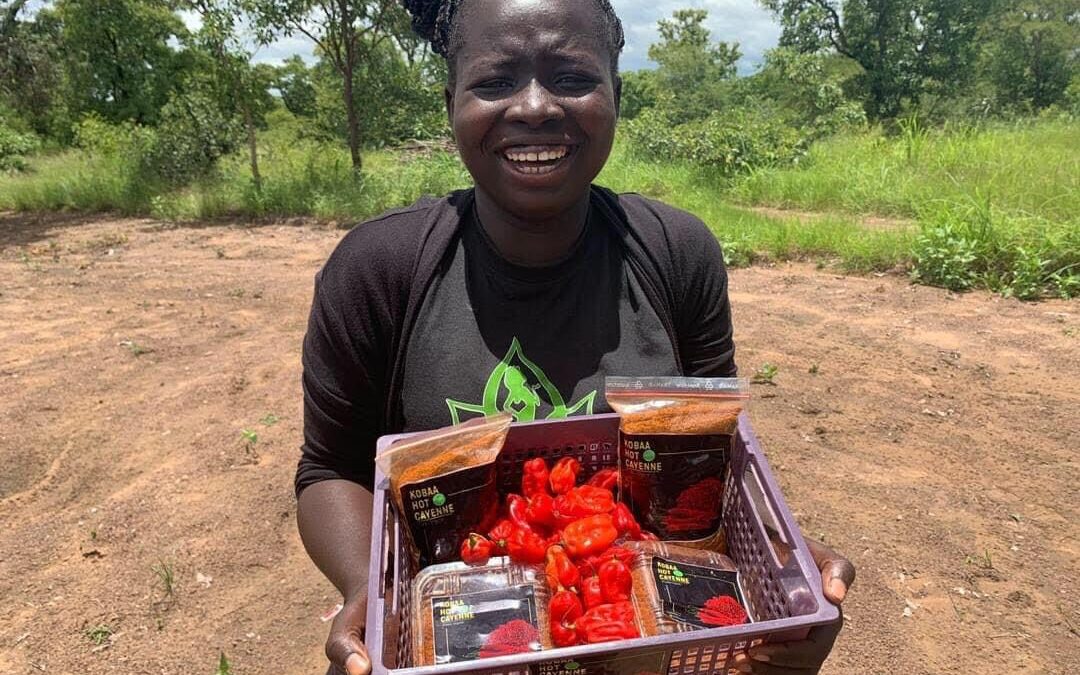
Kipo Olivia also received business development training and GHS5,000 from the program in January 2020 to fence her farm and purchase an irrigation machine. Following this support, Olivia has gone on to raise an additional ₵200,000 for her business, Kobaa O.K, and created over 30 job opportunities for her community members. Currently, she farms on 15 acres and installed a borehole with a solar irrigation system which will allow her to farm all-year round in the Savannah regions of Northern Ghana.
Kipo Olivia, Founder & CEO, Kobaa O.K. Limited
Finally, Hamid Adams, who received business development support for his Shea processing company, Tondaar Ventures, has created over 100 job opportunities for women Shea collectors in the Upper West Region and empowered them to increase their production and profits. His business has also recently attracted a remarkable ₵100,000.00 financing from Leverage Microfinance Limited. This fund is propelling him to meet booming domestic demand and enabling him to tap into the international market, especially UK, Canada and Germany.
Hamid Adams, Founder & CEO, Tondaar Ventures
The Igniting Dreams program’s remarkable impact on young entrepreneurs and their communities showcases its transformative ability to support underserved entrepreneurs in achieving their dreams.
CPI’s 10-year goal is to raise $10 million from development partners, financial institutions, and impact investors to help 10,000 youth with similar testimonies like Mabruka, Olivia and Hamid. The aim is to enable them to launch and grow businesses and create 1 million decent jobs to address poverty, youth unemployment and inequality in Northern Ghana. Its long-term goal is to transform Northern Ghana into the Silicon Valley of Africa, focused on promoting booming entrepreneurship, investment, and economic activities in the area, specifically in Agriculture, Technology and Fashion.
Youth development NGO, Coalition for Positive Impact call on Rt. Hon. Speaker of Parliament
On Wednesday, May 19, 2021, at 1:00 p.m., a delegation of the Board of Directors for Coalition for Positive Impact (CPI), led by the Executive Director, Mr. Maazu Dramani Bayuoni paid a courtesy call on the Speaker of Parliament Rt. Hon. Alban Sumana Kingsford Bagbin.
Among other things, the purpose of the meeting was to discuss the role of youth in National Development and to discover ways in which CPI can form a synergy with the Office of the Speaker to transform Ghana’s demographic asset into an economic dividend.
In his opening remarks, Mr. Maazu Bayuoni explained the mission of CPI to the Speaker’s delegation and tied it into the interest of the Speaker in youth activities while recounting the numerous roles that the Speaker had played in strengthening youth empowerment and development.
He also acknowledged that one of the ways through which today’s youth can be effectively developed is through imbibing in them the value of integrity, which happens to be a core value of CPI. He thanked the Speaker for affording the delegation a warm reception and requested for support for CPI to contribute to the achievement of national youth development goals.
Mr. Gayheart Mensah, Communications Expert at the Office of the Speaker in contributing to the discussion, emphasized the need for CPI to stay abreast of emerging trends in youth development, notable among which are technology, artificial intelligence and the future of work for today’s youth. He further commended CPI for the good work it is doing in developing talents of youths. The Rt. Hon Speaker, Alban Sumana Kingsford Bagbin, expressed great delight in the work of CPI and urged the Organization to work harder and to continue the good work it is doing for the youth of Ghana.
He drew a distinction between youth empowerment and youth development, noting that people often confuse both terms unknowingly. He then stressed on the need to teach the youth to be responsible and lead their lives according to the highest principles of integrity. Rt. Hon Speaker applauded the delegation for taking the initiative to mentor and train the youth of the country and pledged the support of His Office to help the Organization to achieve its goals.
The CPI delegation was made up of Mr. Maazu Dramani Bayuoni (Executive Director), Miss Naziha Amin Gombilla (Executive Secretary), Mr. Edem Baeta (Board Director) and Mr. Frank Anwelle (Board Director).
Youth call for equal employment opportunities without prejudice to age
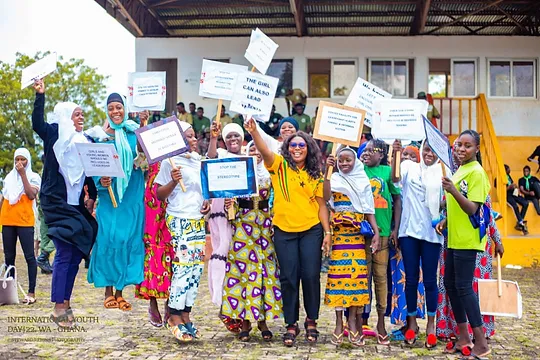
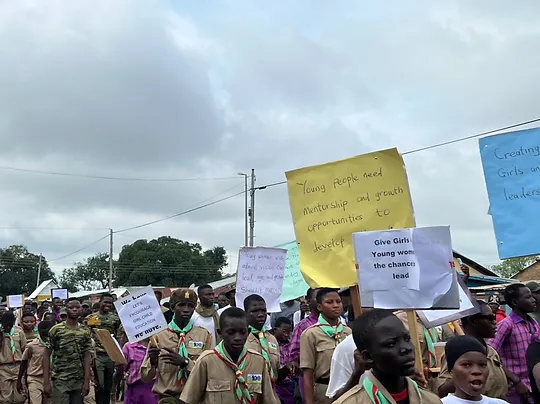
The 2022 International Youth Day (IYD) has been commemorated with a call on government and stakeholders to create laws and policies that ensure equal access to job opportunities for youth without prejudice to age.
This was contained in a joint communique issued by concerned youth groups and networks in the Upper West Region on the occasion of the IYD celebration in Wa on Friday August 12, 2022 on the theme: “Intergenerational Solidarity: Creating a World for All Ages”.
The commemoration was a partnership between Coalition for Positive Impact (CPI) and Community Aid for Rural Development (CARD Ghana), a member of the “She Leads” consortium, under the auspices of the National Youth Authority (NYA).
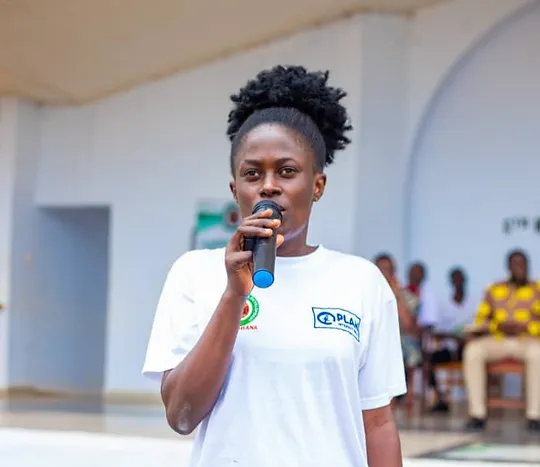
The communique read by Miss Ernestina Biney, the Project Coordinator for the “She Leads” project with the Community Aid for Rural Development (CARD Ghana), said there was the need for relevant policies to be designed consciously to support the growth and development of young people through intergenerational solidarity.
“On this special occasion, we call on all stakeholders to reflect and act on … urgently create and enforce policies and laws that ensure equal employment opportunities for all potential people regardless of age and gender,” the statement read.
It also called for a review of highly-placed luxury and better repositioning of the country by scaling up level of patriotism among all people for national development.
“We have a great role to play in making this country a better ecosystem for everyone to thrive well,” the statement urged as a way to “avoid the unnecessary migration through the desert into Europe” largely by young people.
The communique further called for a clearly mapped out developmental agenda for the youth of the Upper West Region to outlive the intergenerational solidarity and create a world for all ages.
It however observed that immorality among the youth was a barrier to achieving age solidarity as it sates, “morality among the youth in our region has been questioned lately by the older generation due to the growing incidence of nude leaks within the municipality and beyond.”
“We call on the youth to desist from creating and promoting such content online to avoid contravention with both the constitution and our customary laws.
“We further call on all youth groups and networks to join forces in our quest to tell a better story with zero tolerance for online obscenity (nude videos and pictures) in the municipality,” the communique solicited.
Mr Maazu Bayuoni, the Executive Director for Coalition for Positive Impact (CPI), challenged the society to embrace a new partnership between the older and younger generations to end the cascading effects of ageism.
He believed that a partnership between the two generations would bridge the gaps of political participation, work opportunities and other inequalities committed against the youth, women and girls and the differently-abled.
He said this could be achieved through the development of mentor-mentee relationships between young people and responsible adults, and also policy changes to allow young people to contest national elections at “a certain lesser fee.”
“If young people who are closed to 30 per cent [of the population] are only represented in Parliament by less than 3 per cent; that is a serious problem.
“We need to have electoral quota for young people to say that young people who have the capacity and can be able to represent their various constituencies should pick the forms at a certain lesser amount, so that they can contest for political power,” the CPI Director observed.
The Wa Municipal Director of the National Youth Authority (NYA), Mr Ambrose Akum-yong, said the achievement of the UN Sustainable Development Goals anchored on harnessing the potentials of all generations.
He observed that young people continue to suffer many barriers of ageism in areas of employment, political participation, health and justice and thus, intimated that action was needed across all generations to achieve the SDGs.
Dr Hafiz Bin Salih, the Upper West Regional Minister, in a speech delivered on his behalf, by his Personal Assistant, Mr Abdul-Rahaman Meigoro, said development was shared responsibility and therefore the potentials of all generations must be leveraged.
He intimated that Ghana was already on the trajectory to ensuring age inclusivity by developing a national youth policy.
The mammoth youth day celebration featured a health walk which preceded a mini rally and a concurrent free health screening exercise.
The event was supported and attended by various youth groups and organization including Necessary Aid Alliance, Rabito Clinic, Ghana Red Cross Society, Youth Alliance for Community Change, among others.