There is a version of the conversation about Northern Ghana that most development audiences know well. It speaks in the language of gaps. It frames the north as a region defined by what it lacks, and it tends to produce interventions that are well-meaning, short-term, and ultimately insufficient.
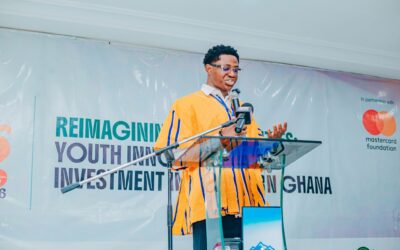
At the 8th Igniting Dreams Summit in Wa, CPI President Maazu Bayuoni replaced that conversation with a different one.
“This is not a story of a region that failed. This is a story of a region that was failed.”
— Maazu Bayuoni, CPI President, Igniting Dreams Summit 2026

The Structural Reality
Bayuoni’s argument was grounded in data that has been available for years but rarely centred in conversations about the north’s entrepreneurial potential.
All five northern regions rank among Ghana’s most deprived. The Savannah Region leads with 49.5 percent of its population classified as multidimensionally poor, followed by the North East at 48.1 percent, Upper East at 43.0 percent, Northern at 38.4 percent, and Upper West at 37.4 percent. A landmark May 2026 GSS report confirmed that the six poorest districts in the country are all within the North East Region alone.
Youth unemployment across the five regions sits at 25.7 percent. Households in agriculture face poverty rates more than five times higher than those in services. These figures describe an economy where the young population is growing, the formal job market is not absorbing it, and the informal businesses that fill the gap operate without access to capital, mentorship, or markets. This is the pioneer gap. In Northern Ghana, it is the cumulative result of financing systems that were never designed to reach the region’s founders.
An Investment Opportunity.
Bayuoni was precise about what he was not doing. He was not asking for sympathy. He was not presenting the north as a beneficiary in need of rescue. He was presenting it as an economy with unrealised returns.
“Despite every barrier, youth-led businesses are emerging across agriculture, technology, fashion, and manufacturing. Northern Ghana sits on extraordinary endowments — shea, groundnuts, livestock, minerals, and now gold. It has a young population that is hungry for opportunity.”
— Maazu Bayuoni, CPI President
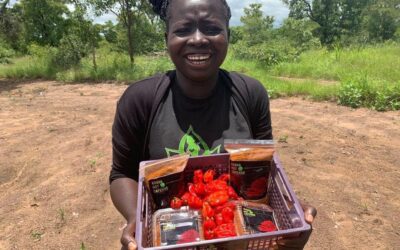
The 2026 cohort is evidence of this thesis. Sixty-five percent of fellows operate in agribusiness, building on the region’s natural comparative advantage. The cohort is majority female, mostly degree holders, and spans all five northern regions. These are not the demographics of a region that lacks human capital. They are the demographics of a region whose human capital has been systematically under-resourced.
The Call for Partnership

Bayuoni’s address directed its sharpest language at the financing ecosystem.
“We are not asking for pity. We are not asking for charity. We are asking for partnership and investment.”
— Maazu Bayuoni, CPI President
Bayuoni urged investors and development finance institutions to adopt financing models calibrated to the realities of early-stage entrepreneurs in underserved communities. The Igniting Dreams model is built on this conviction: fellows are selected not because they have ideas, but because they already have businesses, operational and showing early traction. The programme provides what the market has withheld: training, mentorship, seed capital, and entry into the Niibala Alliance.
At the Summit, GH₵440,000 in seed funding was deployed to fellows in a single afternoon. Every cedi went to a business already operating, already employing, already embedded in a northern community.
The Government Response
The Upper West Regional Minister, Charles Lwanga Puozing, delivered the keynote address on Day 2 of the Summit and set a tone that reinforced CPI’s framing. He spoke to the work CPI has been doing in Northern Ghana, acknowledged the impact it is creating on the ground, and gave particular recognition to the strong representation of women at the Summit.
“The future of Northern Ghana will not be determined by the challenges we inherit, but by the solutions we create.”
— Charles Lwanga Puozing, Upper West Regional Minister
His presence at the Summit, alongside traditional leaders, business executives, investors, and development partners, reflected a growing alignment between government rhetoric and the on-the-ground work of organisations like CPI that are building the entrepreneurial infrastructure the region needs.
Voices From the Ecosystem
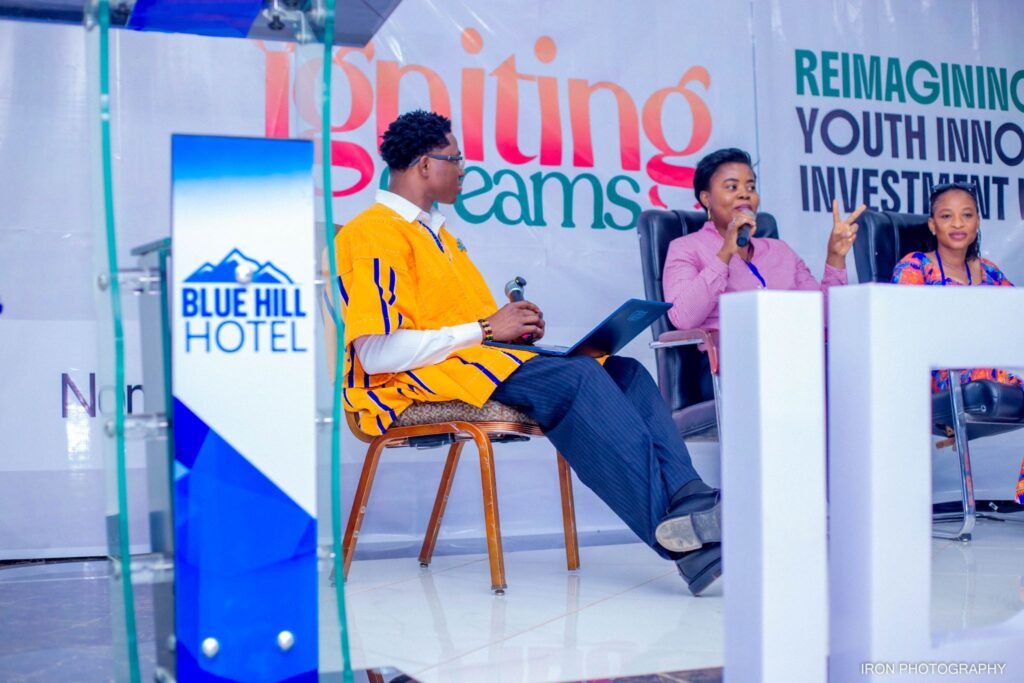
Mawuse Gyisun of Sommalife Ltd. described building an agribusiness in the north as an experience that tested every assumption about what is possible. She built it anyway. Sommalife has now digitised over 100,000 farmers and connected more than 40,000 to active commercial markets. Her testimony made the point plainly: the barriers facing northern entrepreneurs are structural, and they are reversible.
Mumuni Amina, winner of the 2023 Igniting Dreams Prize, provided the most concrete evidence of the model’s returns. Her seed funding transformed a Bole-Bamboi shea butter operation into an enterprise that now trains 38 women and produces eight tonnes monthly. That trajectory is the investment case in miniature.
The Broader Frame
Northern Ghana is not a problem to be managed. It is an economy to be invested in. Its entrepreneurs are not waiting to be saved. They are building, hiring, and growing. They need capital that meets them where they are.
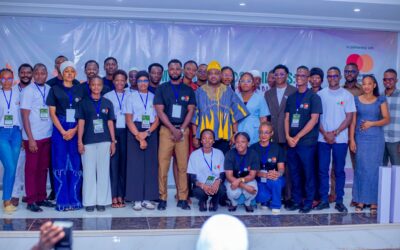
The 2026 Summit, its 500 participants, its GH₵440,000 in deployed capital, its 18 fellows now entering the accelerator phase, is the evidence that the investment case is real.
The question is whether the capital will follow.
Learn more about CPI’s work and partnership opportunities at cpimpact.org.

0 Comments